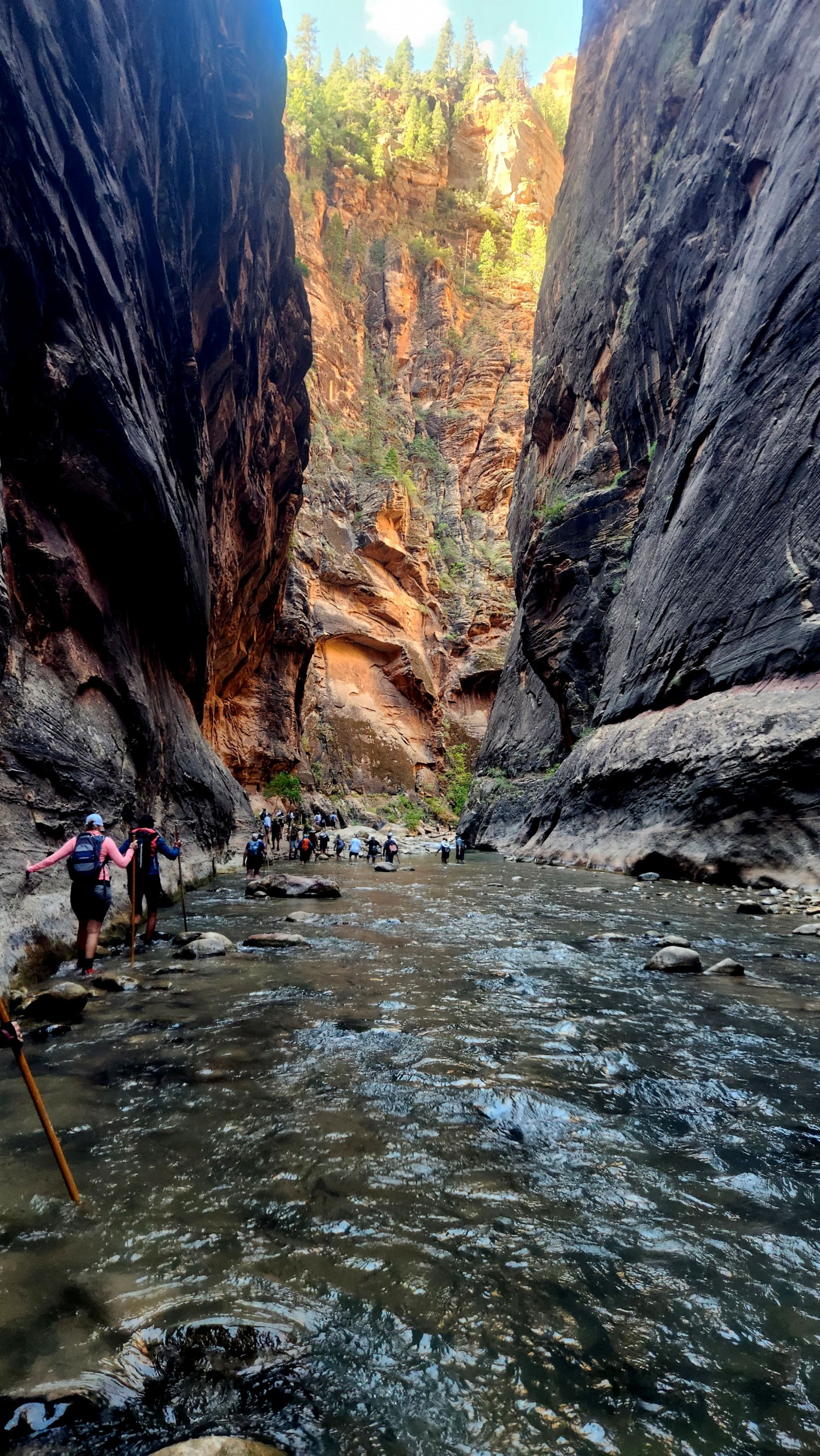
29th August through 31st August 2024.
Zion National Park is a crown jewel of Utah’s landscape, and at the heart of this natural wonder lies the Narrows—a hike that offers a singular experience, taking you into the very depths of its majestic canyons. If you’re an adventure enthusiast or a nature lover, this hike should be on your bucket list. Known for its stunning riverwalks through towering canyon walls, the Narrows is a unique and a breathtaking experience. Here’s everything you need to know about the hike and tips to make your adventure unforgettable.
Best Time to Visit
What’s fascinating about Zion National Park is that if you want the best temperatures for both the Narrows and the rest of the park, you might need to plan two separate trips. Timing your visit to the Narrows is essential for a safe and enjoyable experience. We opted to visit in late summer, just before the onset of fall, and the conditions were nearly perfect for wading through the Virgin River. The high was in the 80s, making the cool river water feel refreshing—though initially a bit chilly, it took only a few moments to acclimate and feel refreshed.
However, while the Narrows was ideal, the rest of Zion was blazing hot at around 100°F, which made exploring other areas of the park less comfortable. For this reason, I’d recommend planning your trip to the Narrows during the summer when river conditions are prime and saving the rest of the park for spring or, better yet, fall, when the temperatures are cooler and the autumn colors are at their peak.
Keep in mind that visiting the Narrows during other seasons poses different risks. In winter, the river water can be extremely cold, and snowstorms are a possibility, while spring can bring a heightened risk of flash floods. Flash flooding is a concern year-round and can lead to trail closures, so it’s always important to check weather updates and river conditions at the park’s visitor center before heading out.
Getting to Zion and to the Narrows hike Trailhead
Zion National Park is nestled in the stunning landscapes of southern Utah. For our trip, we flew into Las Vegas International Airport, rented a car, and drove approximately 2 hours and 45 minutes to the park. Alternatively, if you prefer a shorter drive, you can fly into St. George Regional Airport in Utah, which is about an hour away from Zion. From there, you can either rent a car or take a convenient shuttle service like the St. George Shuttle, which runs directly to the park.
Once inside Zion, navigating to the Narrows trailhead is made incredibly easy, thanks to the park’s efficient shuttle system. During peak season, from mid-March through November, the shuttle is the only way to access Zion’s most popular areas, including the Temple of Sinawava—the starting point for the Narrows hike. You can park your car at the Visitor Center or in the charming nearby town of Springdale, where shuttles run regularly.
The shuttle ride itself is a treat, taking you along the famous Zion Canyon Scenic Drive. This 7-mile journey winds through towering red rock cliffs and lush greenery, ending at the Temple of Sinawava. The shuttle system helps reduce congestion and preserve the park’s natural beauty, making your journey to the trailhead both easy and eco-friendly. Keep in mind, however, that parking at the Visitor Center fills up quickly during peak season, and shuttle lines can be long.
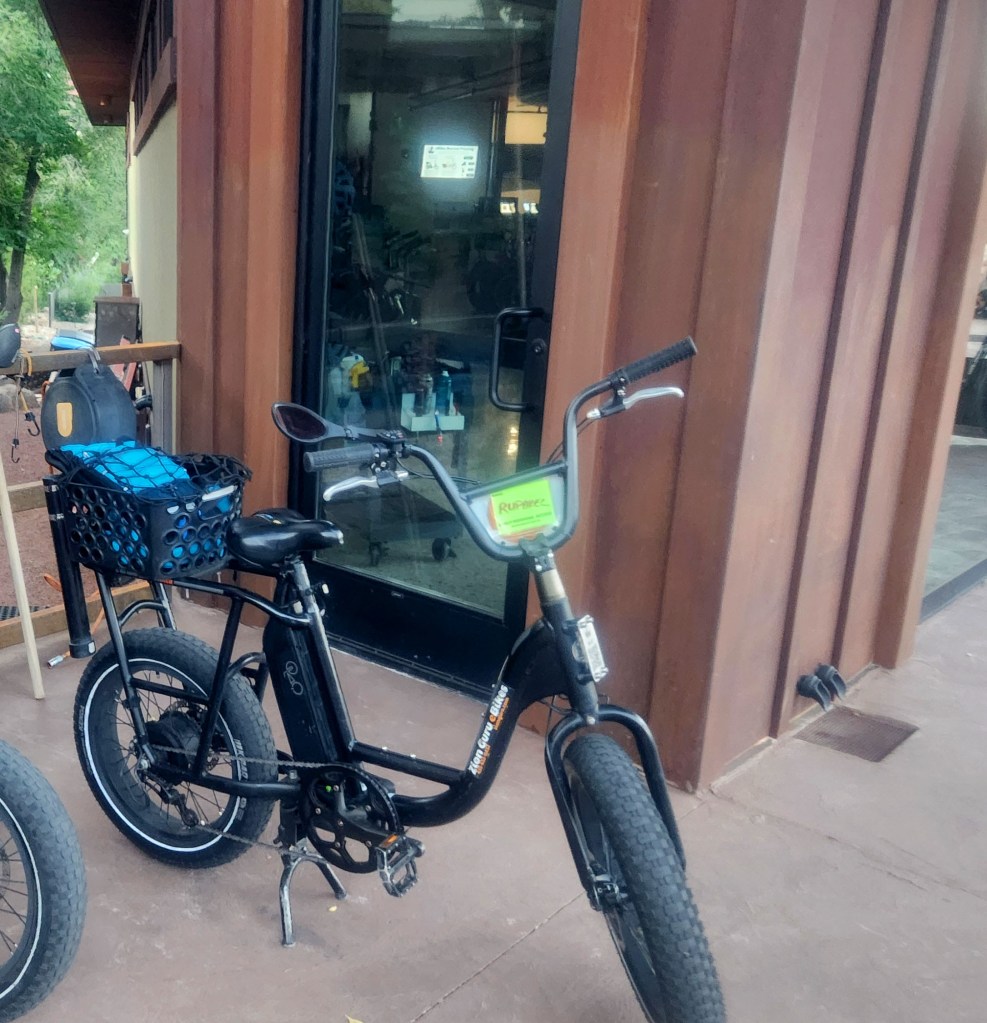
For those looking for a more adventurous and flexible option, renting an e-bike is an exciting alternative. E-bikes can be rented at the Visitor Center or from various rental shops in Springdale. The ride to the trailhead is not only scenic but also fun, as the e-bikes come equipped with safety features like rearview mirrors and helmets. They also have provisions for storing backpacks and hiking poles, making them a practical choice. There are bike parking facilities at the Temple of Sinawava, so you can securely leave your e-bike while you enjoy the hike.
We opted for the e-bike route, and it was an absolute blast! Even in the summer heat, the ride was exhilarating and offered unparalleled views of Zion’s breathtaking landscapes, making the journey to the Narrows trailhead part of the adventure.
Our Stay at Flanigan’s Resort and Spa
While the park offers the Zion Lodge for lodging, for our visit, we chose to stay in Springdale. It is a charming and picturesque town nestled at the gateway to Zion National Park. Surrounded by towering red rock cliffs, it serves as the perfect base for visitors exploring the park, offering a wide variety of restaurants, cafes, and shops with a relaxed, small-town vibe. Despite its size, Springdale is full of character, with local art galleries, outdoor gear rentals, and welcoming hotels and lodges. The town has a laid-back atmosphere but is well-prepared to cater to adventurers, offering everything from gourmet dining to quick bites, many of which include vegetarian and healthy options. Its proximity to Zion makes it an ideal stop before or after a day of hiking.
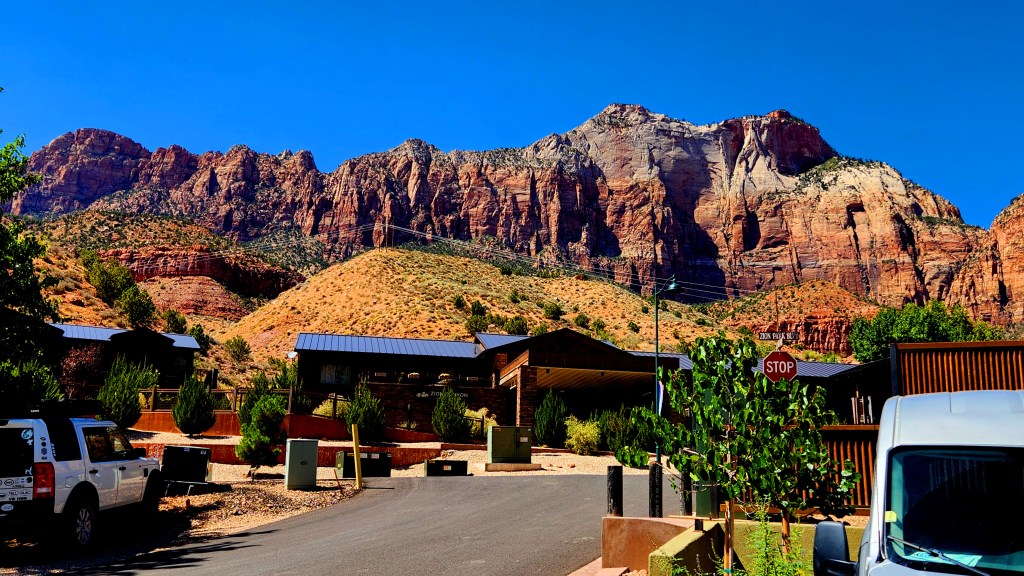
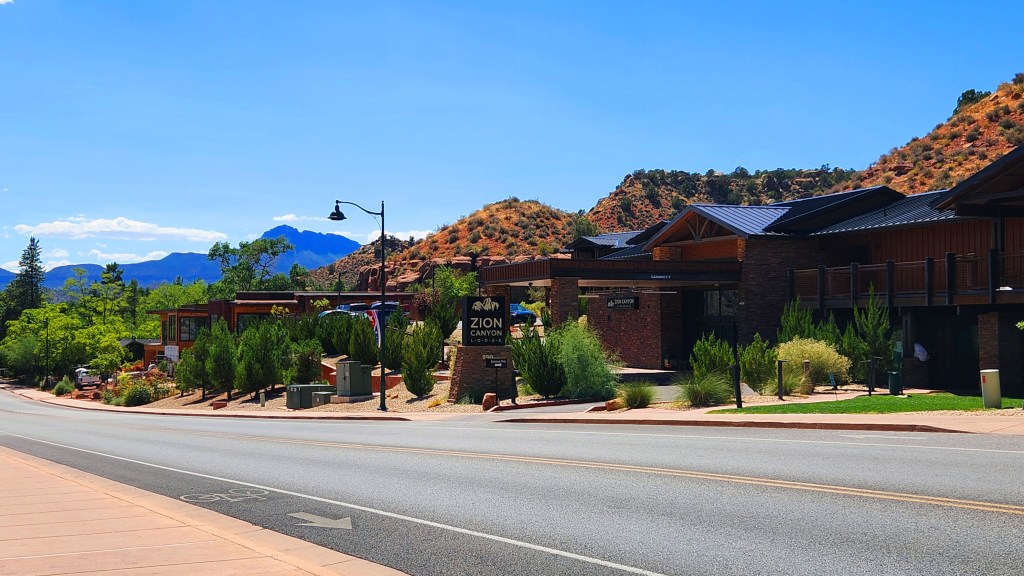
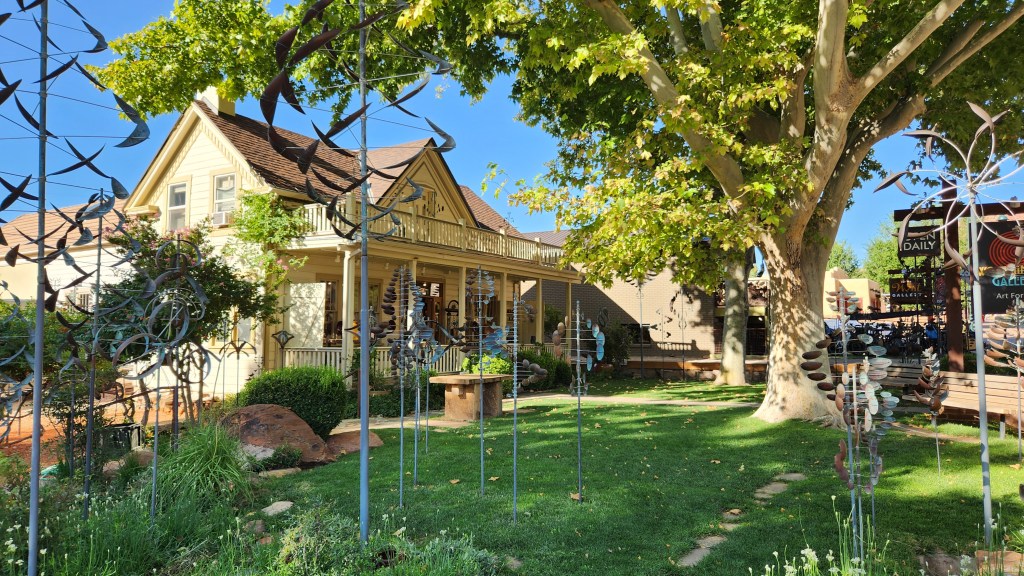
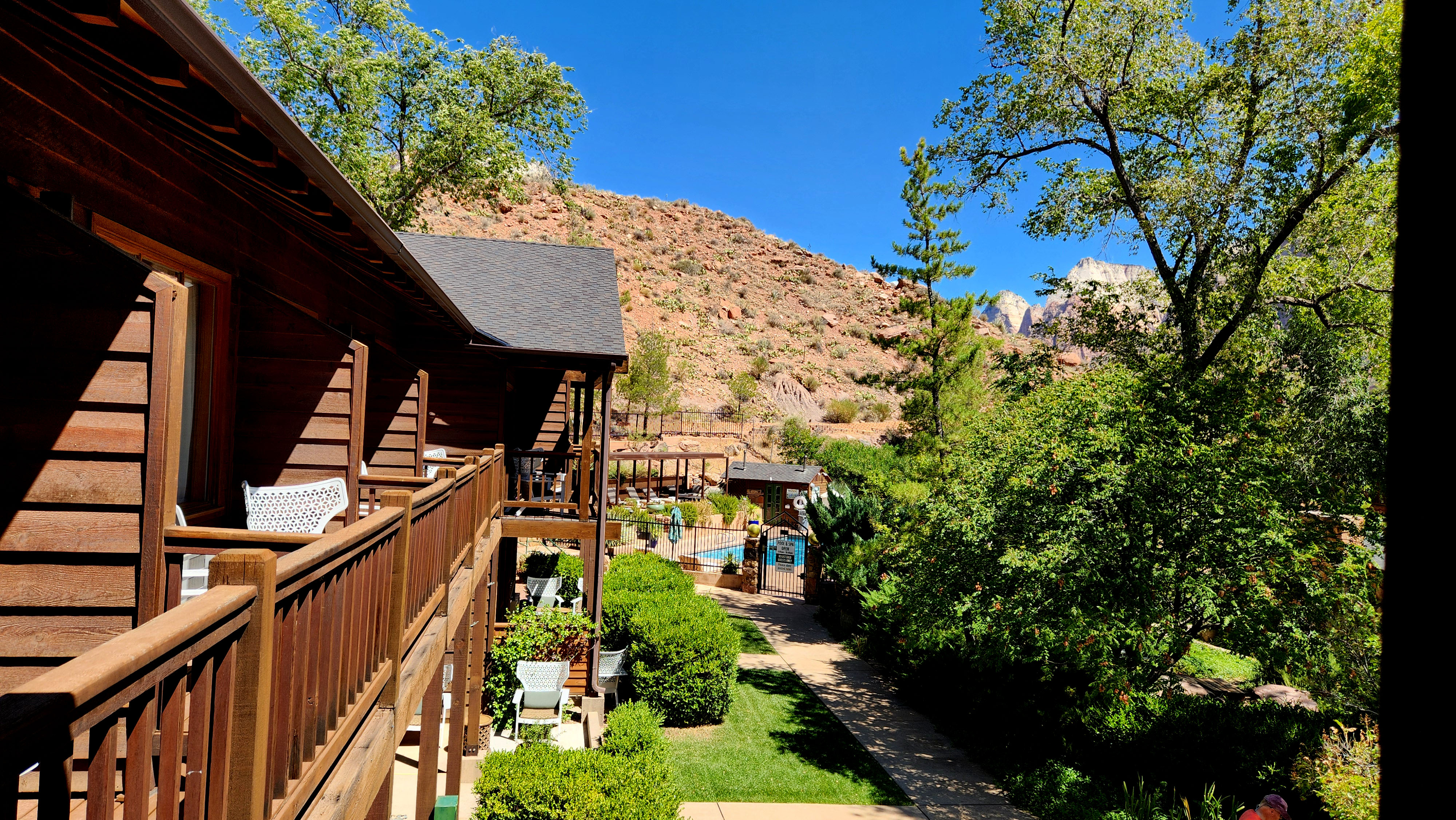
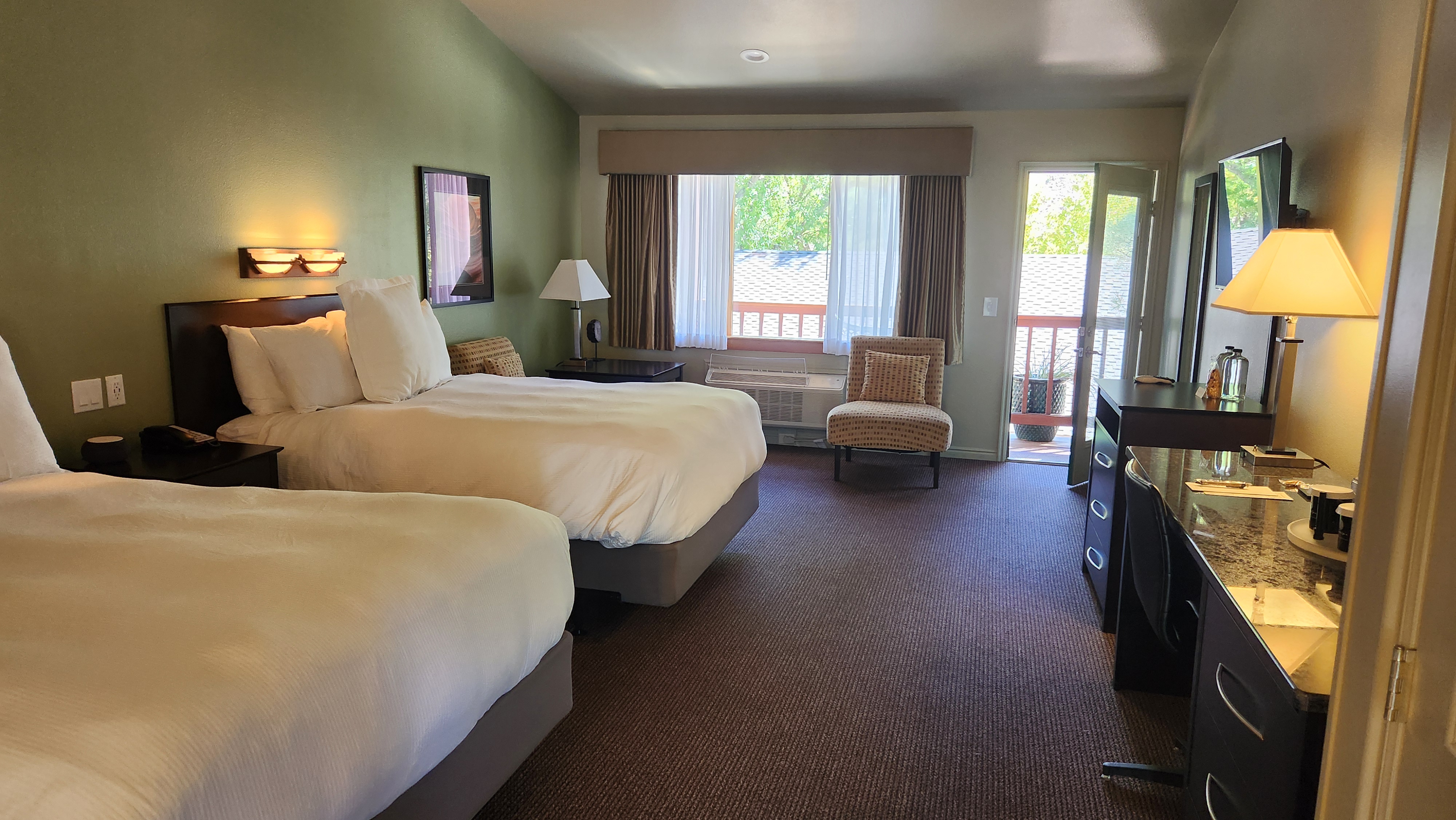
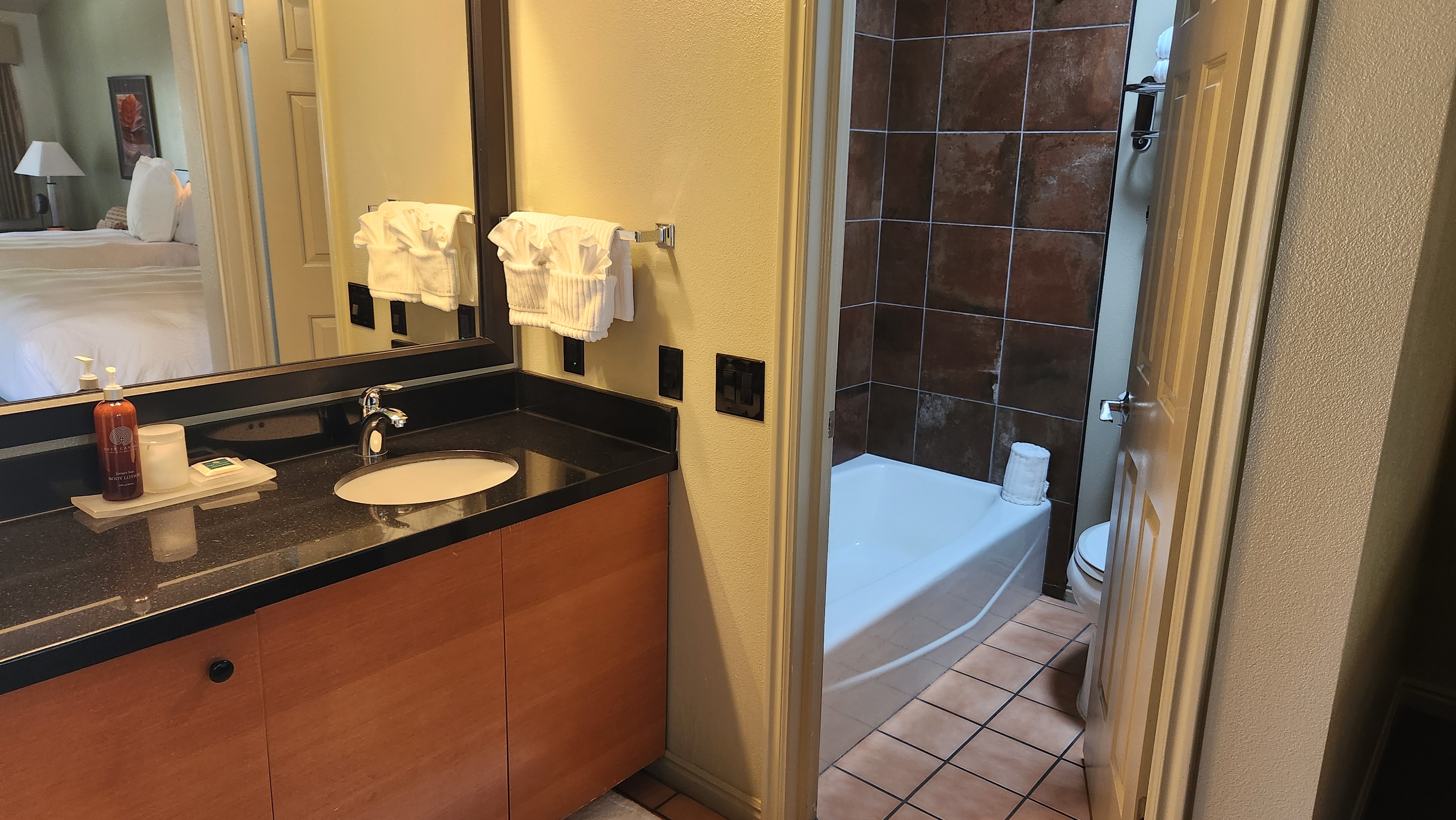
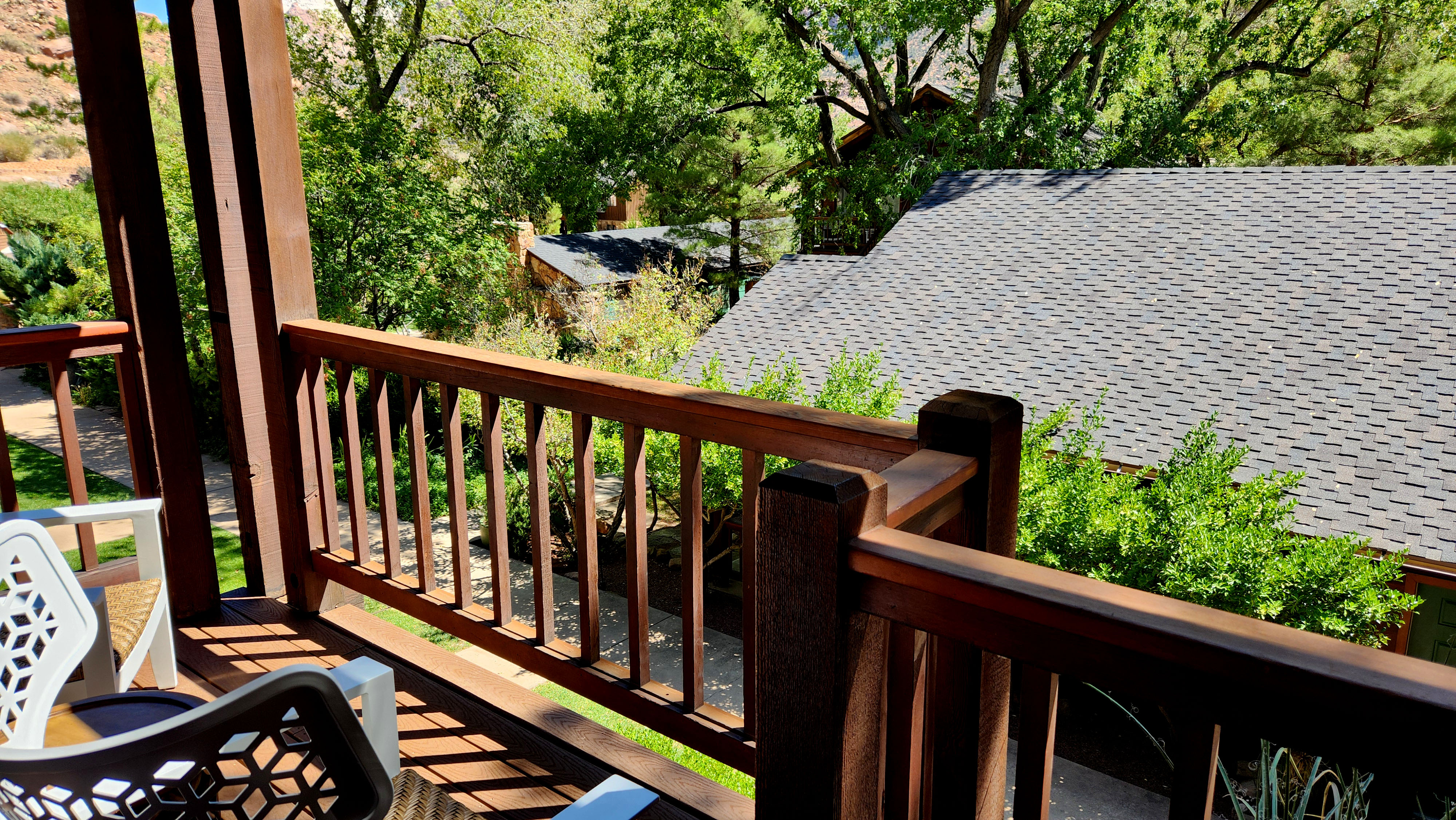
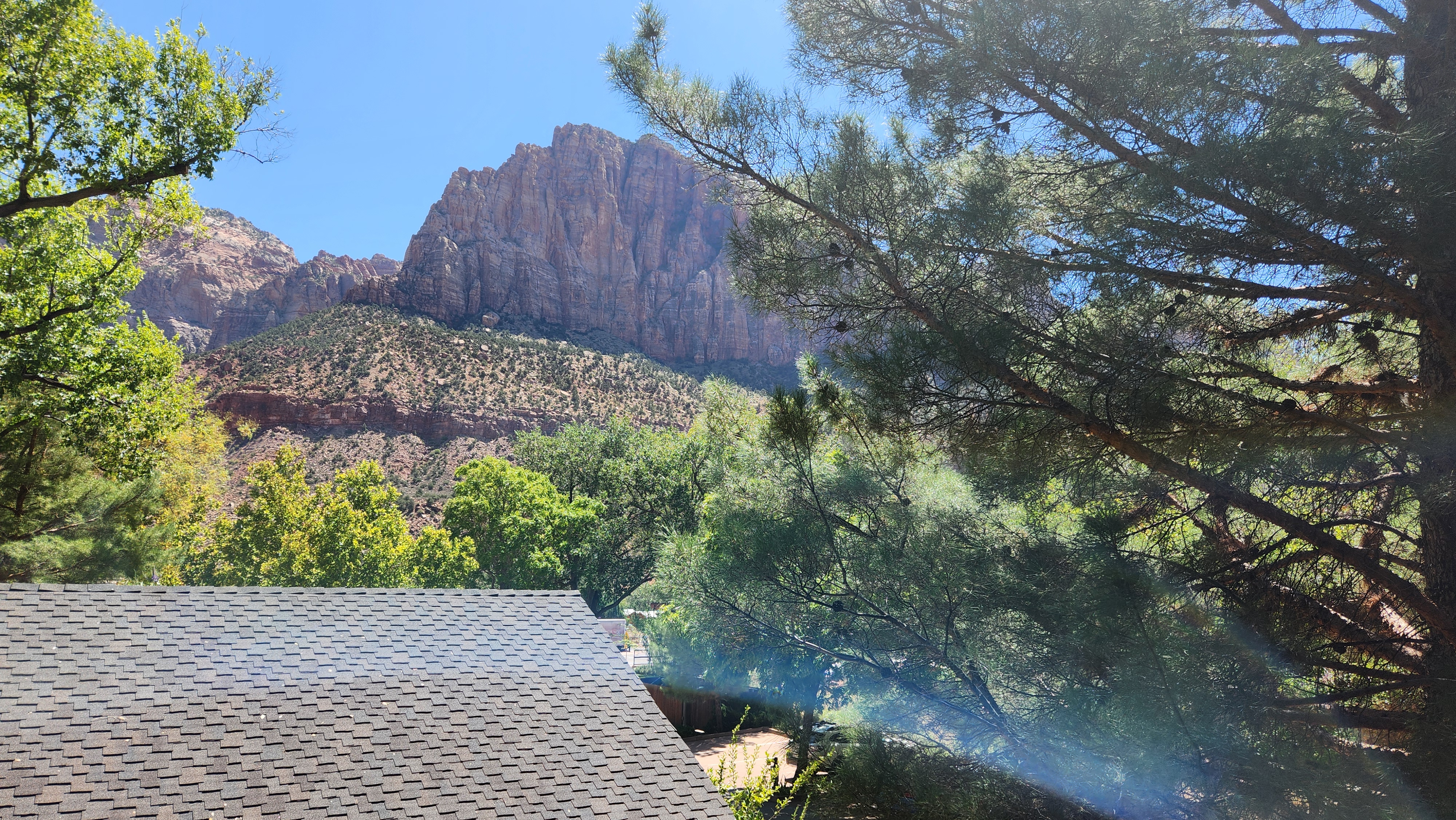
We stayed at Flanigan’s Resort and Spa, located just outside the park’s entrance. The resort is a peaceful sanctuary nestled against the dramatic red cliffs of Zion, offering both luxury and a deep connection to nature. Our double queen room was spacious and cozy, with a private balcony that framed the surrounding cliffs. Flanigan’s hospitality was great, with friendly staff and excellent Wi-Fi and the rooms provided with water bottles and a pack of trailmix for hiking. The resort also featured a spa, which provided a range of wellness treatments. For dining, the resort’s Spotted Dog Café serves up delicious, locally sourced meals—ideal for both fueling up before a hike or enjoying a leisurely dinner after a day of exploring. In addition, we were offered a 10 dollar voucher per person for Oscar’s Café, a local favorite just a short walk away, which covered breakfast and a drink. After a long day of hiking, the resort’s spa and relaxing atmosphere were the perfect way to unwind.

The Narrows Hike: A Journey Like No Other
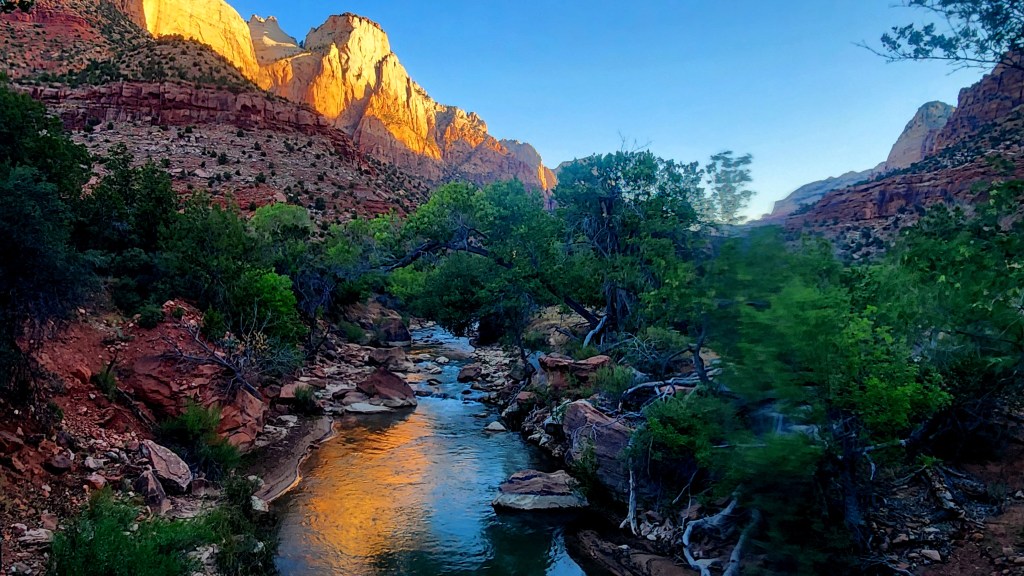
The Narrows hike is an adventure that transcends the ordinary, offering an experience unlike any other. Instead of following a typical trail, you find yourself wading directly in the cool, flowing waters of the Virgin River, enveloped by towering canyon walls on both sides. The sheer scale and beauty of these cliffs, some rising over a thousand feet high, create a dramatic scene that feels almost otherworldly. Hiking through this ancient gorge makes you feel like you’ve stepped into a place untouched by time.
There are two ways to tackle the Narrows: the bottom-up route, a 10-mile trek accessible to the public without a permit and typically completed in one day; or the top-down route, a 16-mile journey that requires a permit and is usually done over two days. Along the top-down route, you’ll find campsites before reaching Big Springs, offering more solitude and access to the full length of the canyon. However, this route is far more demanding and reserved for the truly adventurous.
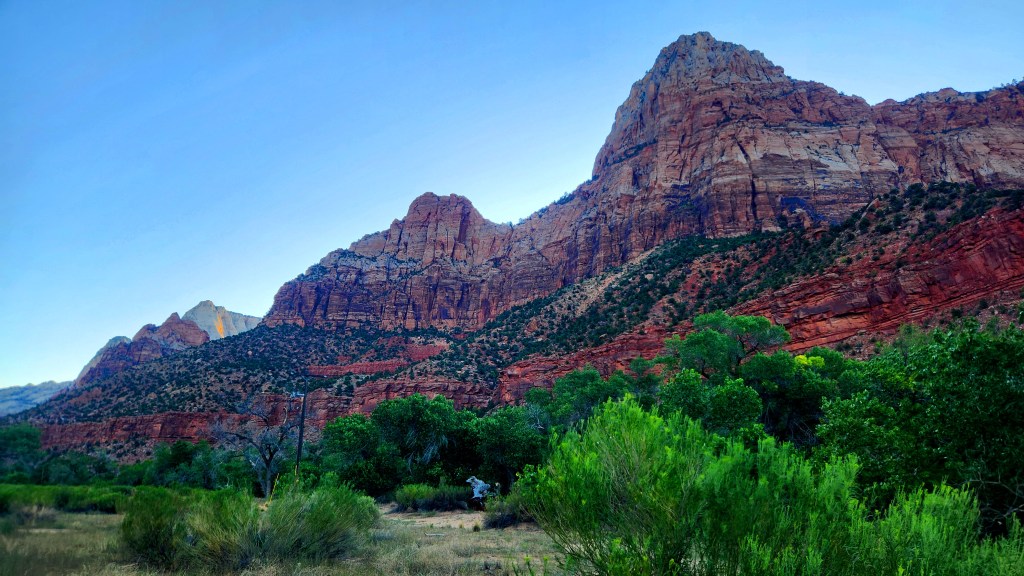
We opted for the bottom-up version, starting our day early by picking up our e-bikes from Zion Guru in Springdale at 7:30 a.m. This allowed us to enjoy a peaceful and stunning ride along the Zion Scenic Byway, arriving at the Temple of Sinawava trailhead before the crowds and shuttle traffic took over. The ride itself was spectacular—much of it along a paved trail next to the Virgin River, with the massive red cliffs of Zion looming dramatically overhead. The Zion Scenic Drive portion required us to share the road with vehicles and shuttle buses, but the breathtaking lookout points along the way more than made up for it. In total, the ride from Zion Guru to the Temple of Sinawava took about an hour.



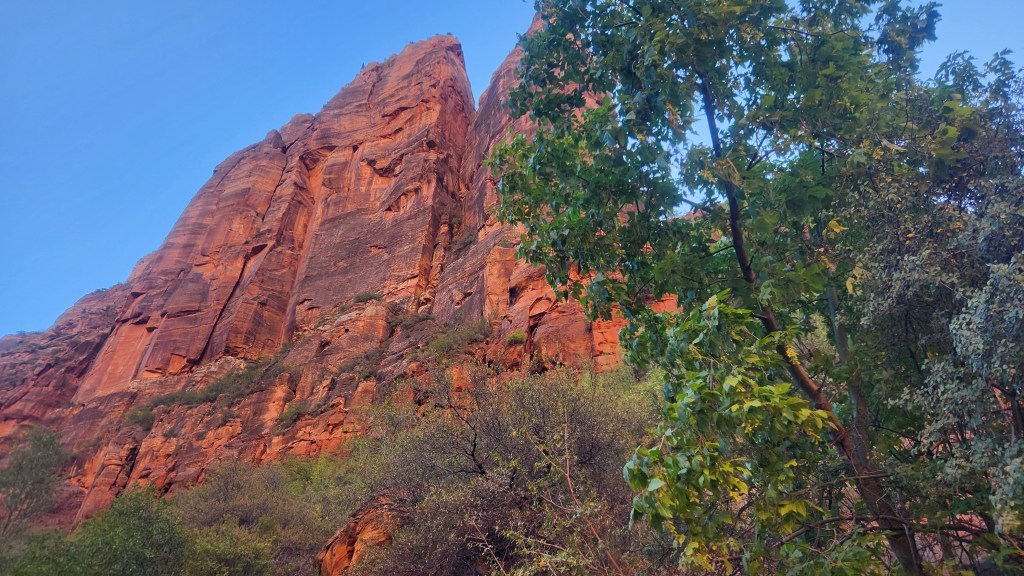
Once at the trailhead, we parked our bikes and began hiking at 8:30 a.m. The first part of the trek is a gentle one-mile stroll along the Riverside Walk, but soon enough, you reach the river—where the real adventure begins. We quickly discovered the importance of our rented gear. Navigating the uneven riverbed and its strong currents would have been much harder without the neoprene socks, canyoneering boots, and walking sticks we rented from Zion Guru. Knowing the hike would last all day and involve wading through deep waters, we also rented a dry bag for our food, water, and essentials.


The moment we stepped into the Virgin River, the cool water was invigorating—a refreshing contrast to the warmth of the sun-drenched canyon. Within the first 15 minutes, we waded through sections where the water reached thigh-to-waist level, but for most of the hike, it was only ankle-deep. As we continued along the 10-mile stretch, certain landmarks guided us and gave us a sense of progress:
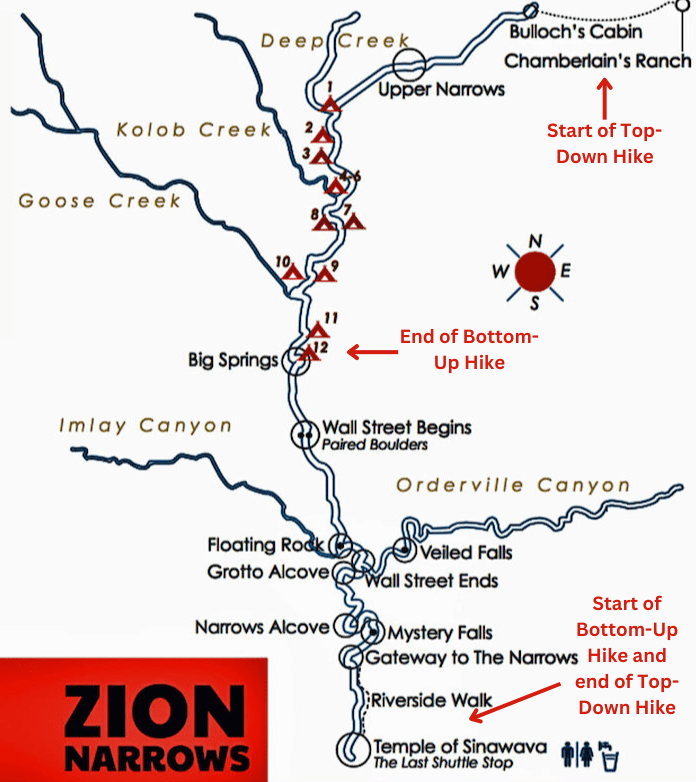
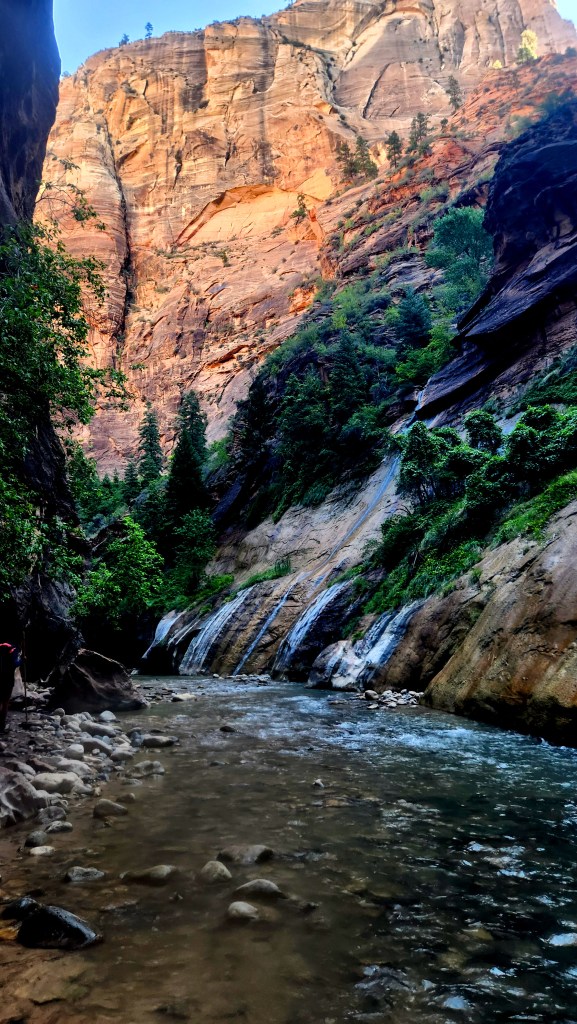
• Mystery Falls (0.5mile one way): A delicate waterfall cascading down the canyon wall, creating a serene and picturesque stop early in the hike.
• Narrows Alcove: A spacious area where the canyon walls form a natural overhang, offering a moment of respite from the river’s flow.

• Grotto Alcove: A lush and secluded section of the canyon where vegetation thrives, adding a touch of greenery to the red-rock surroundings.
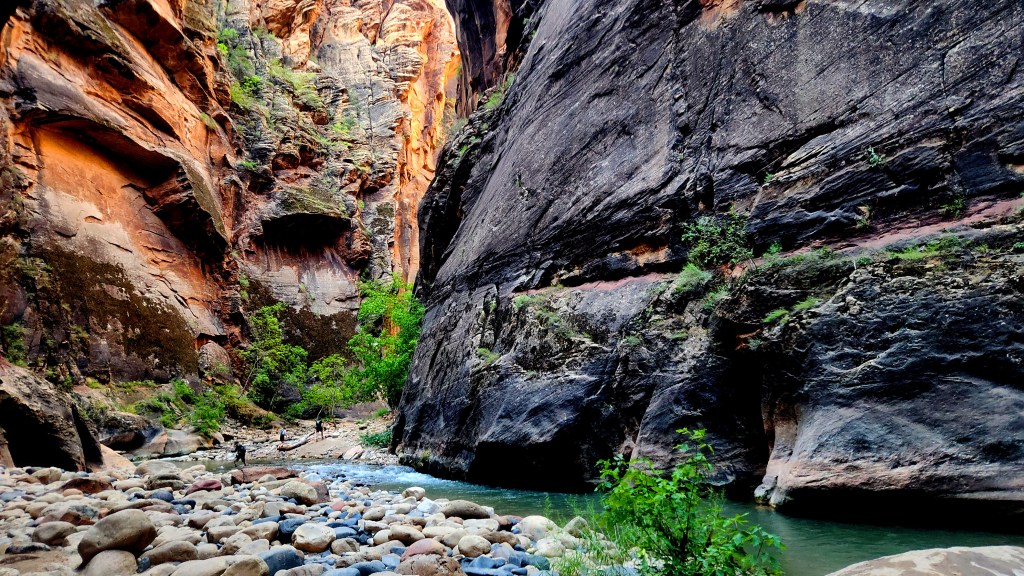
• The Confluence (3miles one way)): Where the Virgin River meets a tributary, marking the beginning of the famous Wall Street section. This is where the trail splits into two distinct paths. One route takes a more challenging path to Veiled Falls, requiring hikers to navigate stronger currents and deeper water. The other, more scenic route leads to Big Springs, a favorite among hikers for its breathtaking beauty and easier terrain. Most visitors opt for the Big Springs path, as it offers stunning views without the difficulty of the Veiled Falls route.
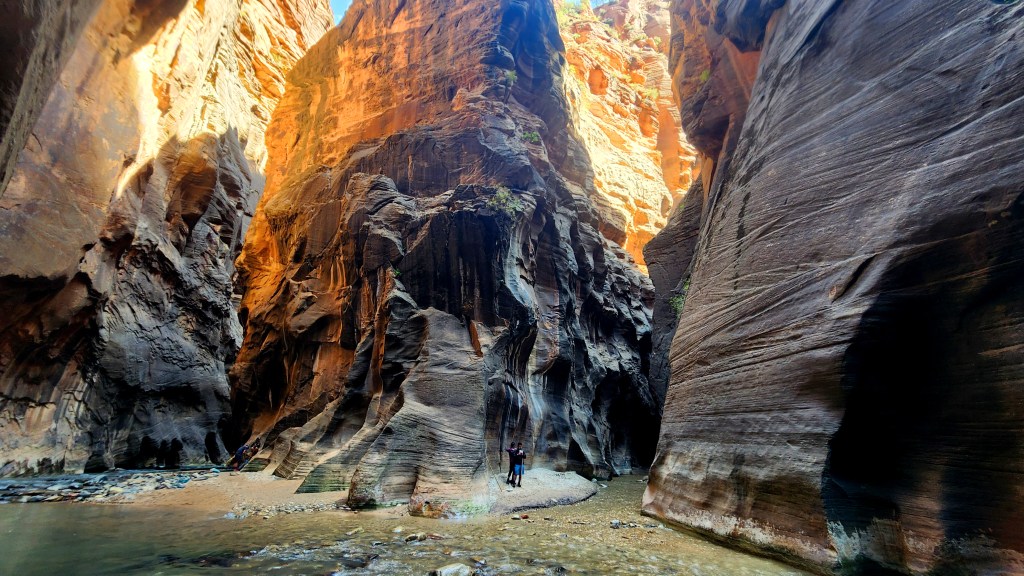
• Floating Rock: A massive boulder that appears to hover just above the riverbed, offering a perfect photo opportunity.
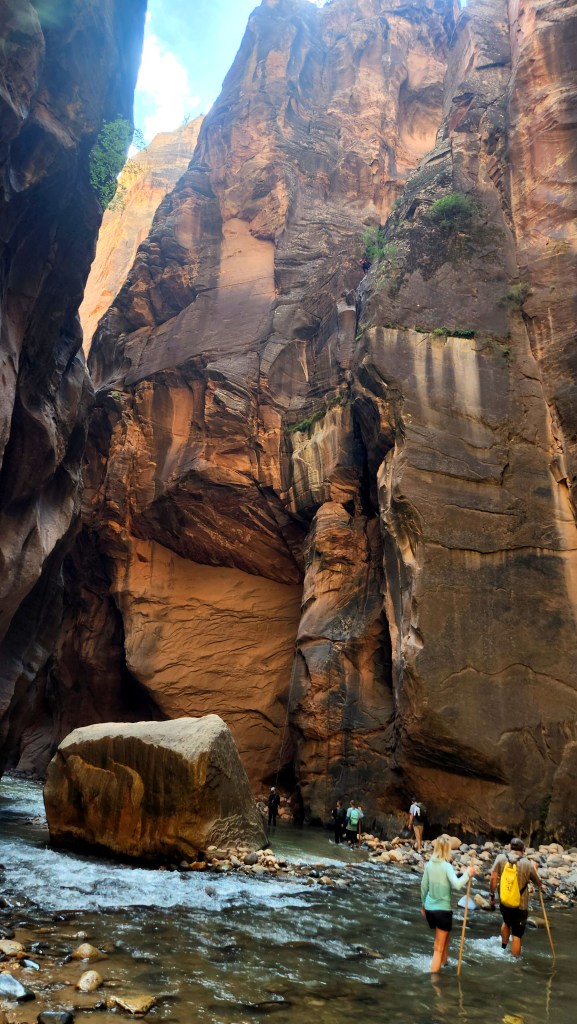
• Wall Street: The narrowest part of the Narrows, with the canyon walls closing in dramatically, creating a mystical and awe-inspiring passage.
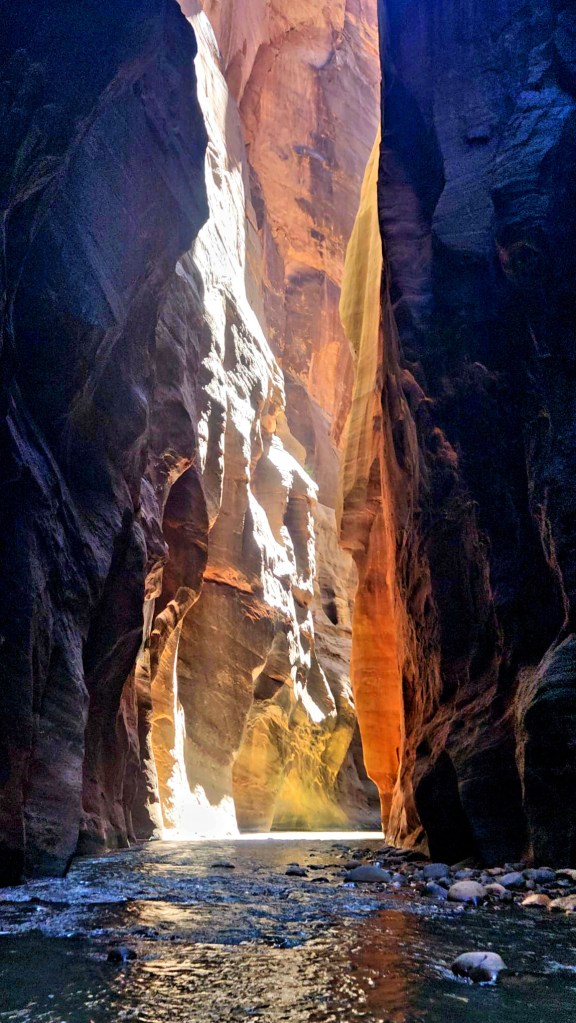
- Boulder Pair: Just past wallstreet, two rocks wedged between the canyon walls, creating a natural gateway that added to the dramatic beauty of the hike and provided a perfect spot for a quick break before continuing deeper into the Narrows

• Big Springs (5 miles one way): The endpoint for bottom-up hikers, where clear spring water emerges from the rocks.
The highlight of the hike is undoubtedly the Wall Street section. Here, the canyon walls close in, creating a narrow corridor only a few feet wide, with towering rock faces stretching high into the sky. The sense of scale is overwhelming, and the deeper water and stronger currents make this part of the hike more challenging. But every step was worth it. The silence and beauty of the towering cliffs are almost spiritual, as though nature itself is sharing a secret with those fortunate enough to witness it. Here are some more stunning pictures we took on our trek:
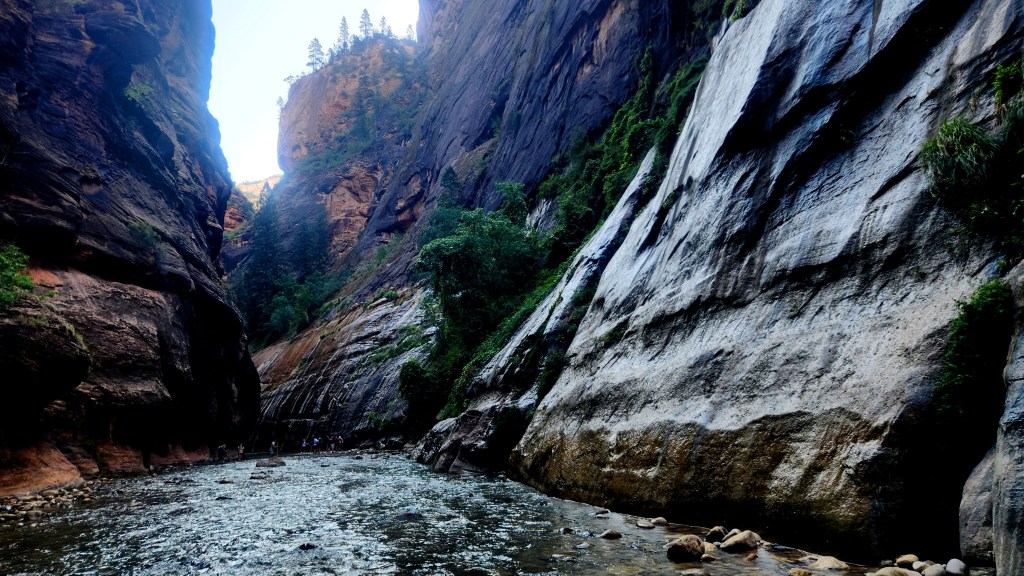


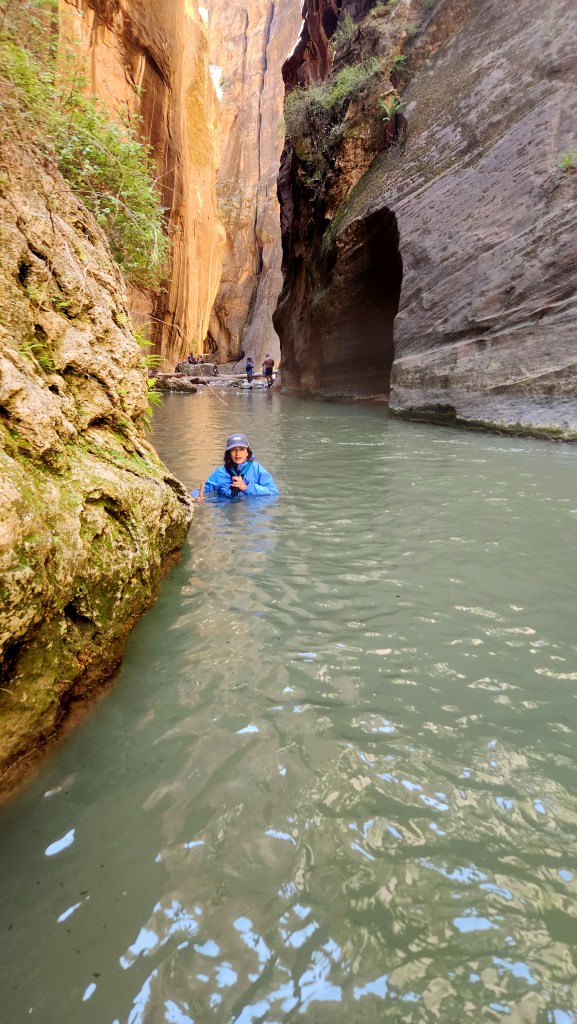
Most visitors turn back at The Confluence, but we decided to push a bit farther. After passing through a stretch of chest-deep water, we eventually reached the point where the river was nearly neck-deep. At this point, no one was continuing, and so we decided to turn back, completing a roughly 7-7.5-mile trek in 7 hours. We then rode another hour on our e-bikes to return back to Springdale and unwind in our room with some delicious pizza, drinks and dessert.
Hiking Essentials:
• Gear: Proper footwear is crucial for this hike. Without the canyoneering boots, neoprene socks, and walking sticks, navigating the slippery rocks in the river would have been far more challenging. These items made a world of difference in both our comfort and safety, allowing us to move confidently through the water. You can easily rent this gear from any outfitter store in Springdale or at rental shops near the park. It’s important to note that hiking in the water with regular socks can lead to painful blisters, so neoprene socks are highly recommended.
• Dry Bags and Phone Covers: A dry bag is essential for keeping your belongings safe from the river. We found it useful to rent one dry bag between the two of us for storing food, snacks, and other essentials during the hike. Additionally, we bought waterproof phone covers from Amazon, which not only kept our phones safe but also allowed us to hang them around our necks for easy access. With our hands free for the hiking poles, navigating through the water was much smoother.
• Clothing: In the summer, lightweight, quick-drying clothing is ideal. A pair of shorts, a t-shirt, and a light, water-resistant jacket will keep you comfortable as the canyon can get chilly, even on hot days. However, in the winter, conditions become more extreme, and you’ll need to bundle up and potentially rent dry pants to stay warm and dry.
• Safety: Always be cautious of the weather, especially the risk of flash floods. These can occur year-round and are a serious hazard in the Narrows. Be sure to check with park rangers for up-to-date information on water levels and weather patterns before setting out.
• Permits: If you’re feeling adventurous and want to tackle the top-down hike (a strenuous 16-mile trek), you’ll need a permit. Permits can be reserved in advance through the National Park Service or purchased in person at the park’s visitor center.
Food Options
When it comes to food, both Zion National Park and the nearby town of Springdale offer a variety of choices, catering to every type of traveler—including those looking for vegetarian and healthy options.
Inside Zion National Park, dining options are somewhat limited, so it’s wise to plan ahead, especially if you’re embarking on a long hike like the Narrows. At the Zion Lodge, you’ll find the Red Rock Grill, which offers a range of American dishes. While the menu leans towards classic burgers and meat-based meals, there are a few solid vegetarian options like soups, fresh salads, and meatless dishes. For something quick and easy, Castle Dome Café, also at the lodge, provides grab-and-go meals, including fresh fruit, snacks, and vegetarian sandwiches—ideal for refueling before or after your hike. However, if you have specific dietary preferences or plan to be out on the trail all day, packing your own snacks is always a smart choice.
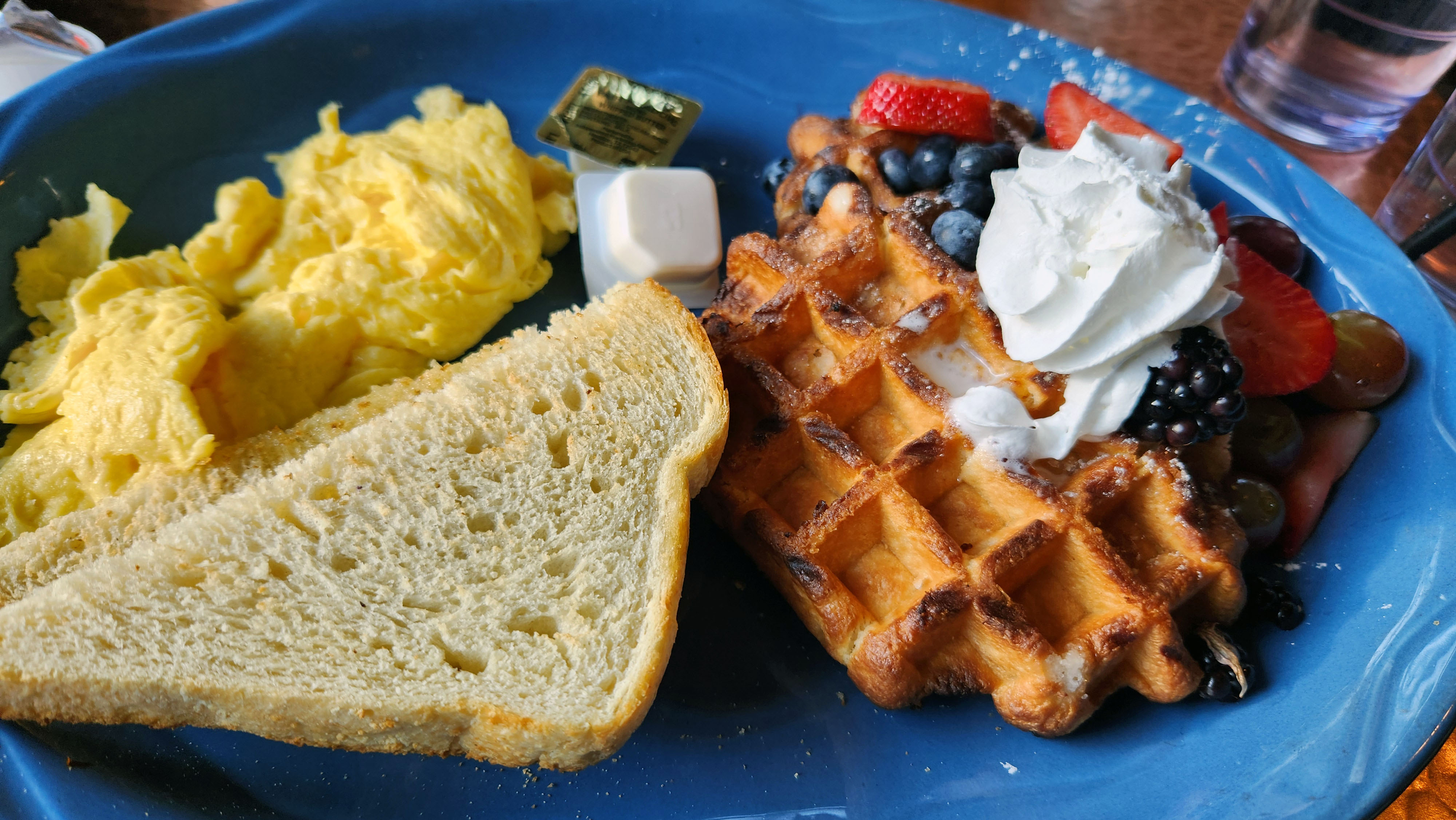
In Springdale, just outside the park’s entrance, the food scene becomes much more diverse. This charming town is a food lover’s paradise, with a wide range of restaurants catering to different tastes and dietary needs. We enjoyed a delicious breakfast at Oscar’s Café, which is known for its hearty portions and vegetarian-friendly options. Their outdoor seating offers a relaxing way to soak in the beautiful surroundings while you enjoy your meal.
Other popular restaurants in Springdale include:
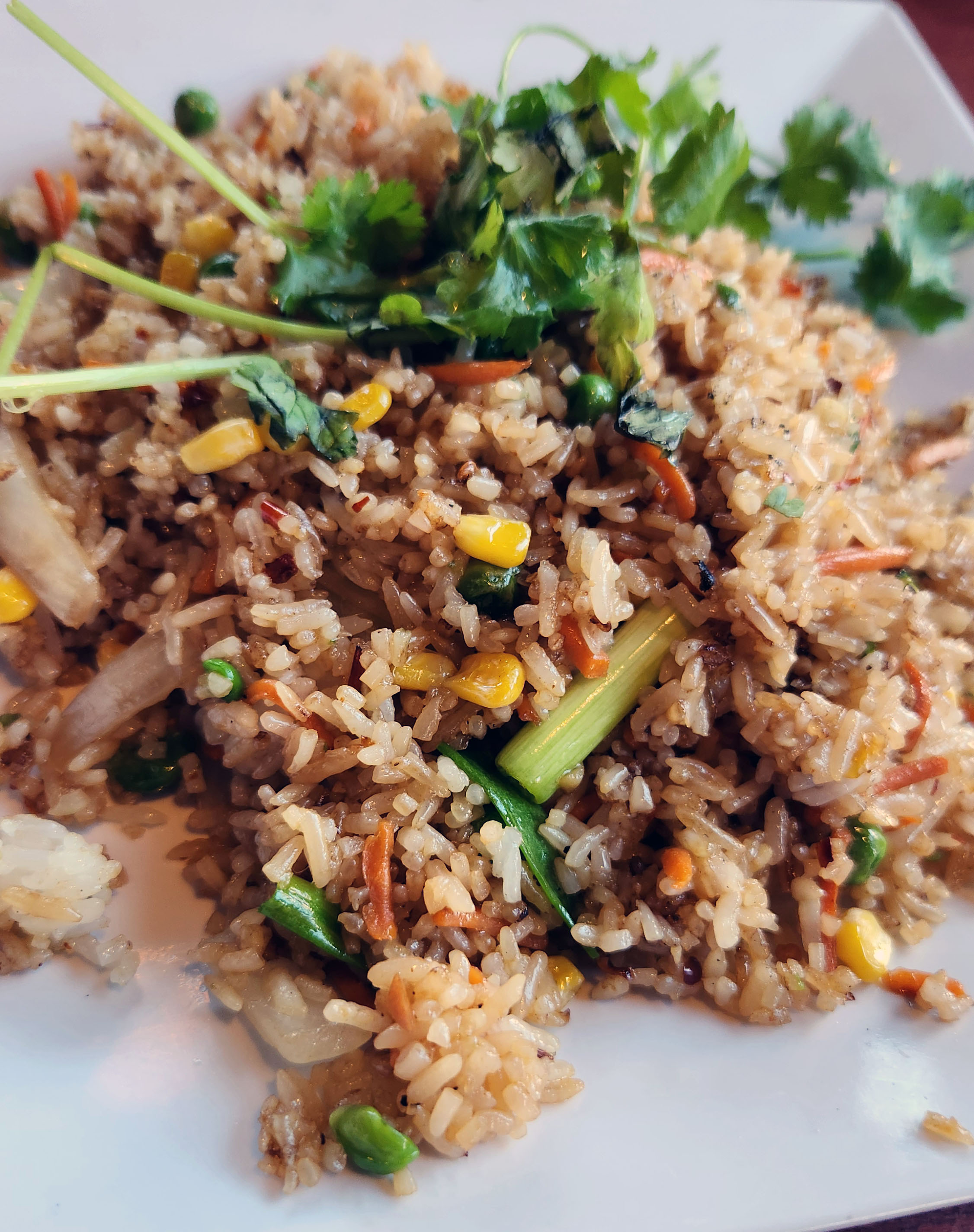
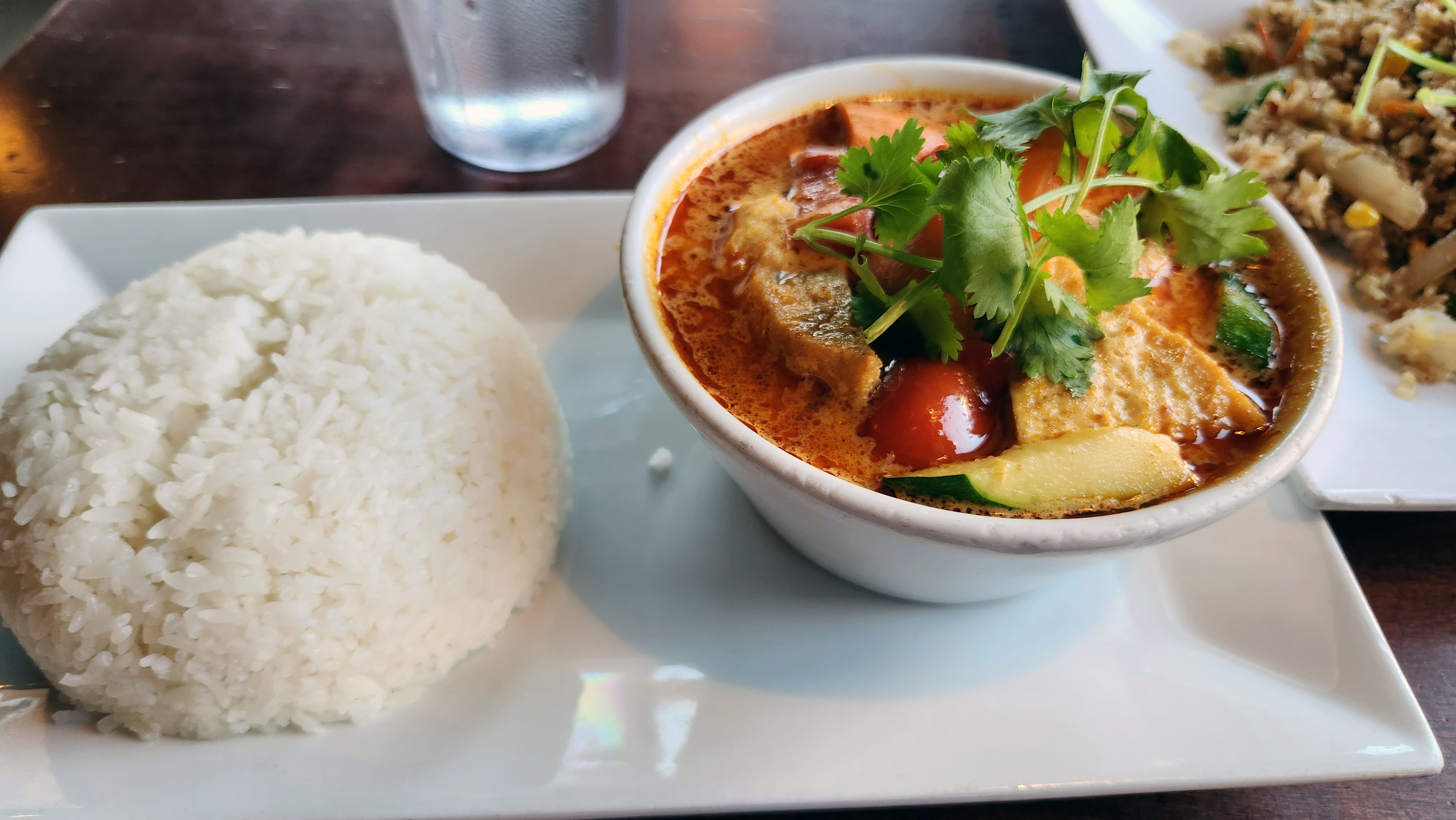
Dulivia Italian Bistro: A great spot for pasta and pizza lovers, with several vegetarian options on the menu. Meme’s Café: Perfect for breakfast or brunch, serving a mix of crepes, sandwiches, and vegetarian-friendly dishes. Zion Pizza and Noodle Co.: A favorite for wood-fired pizzas with plenty of veggie toppings and even vegan cheese options. Thai Sapa: Offering a taste of Asian cuisine with several vegetarian dishes that can be made vegan upon request. Bit and Spur: A Southwestern-style restaurant with hearty vegetarian options like roasted vegetable tacos and fresh salads. King’s Landing Bistro: A bit more upscale, this restaurant serves a variety of American and international dishes, with several vegetarian mains like mushroom risotto. Deep Creek Coffee Company: A perfect spot for a quick and healthy breakfast or lunch, offering smoothies, granola bowls, and veggie-packed sandwiches alongside excellent coffee.
No matter where you eat, Springdale’s restaurant scene ensures you’ll find a meal that hits the spot, whether you’re fueling up for a hike or winding down after a long day in the park.


Reflections and Final Thoughts
The Narrows hike at Zion National Park was an adventure I’ll never forget. It tested our endurance and rewarded us with some of the most breathtaking views I’ve ever seen. Coupled with the comfort of our stay at Flanigan’s Resort and Spa, the trip was the perfect blend of adventure and relaxation.
If you’re looking for a hike that’s not just about the destination but about the journey—one where you can connect with the raw beauty of nature—the Narrows is a must-do. Just remember to pack the right gear, stay aware of the conditions, and embrace the challenge. Zion has a way of reminding you just how small we are in the grand scheme of things, and the Narrows is the perfect place to feel that awe.
 Shivani's Travel Unraveled
Leave a comment